
YogaManLab® AlgaeIQ Omega-3 with 800mg DHA | TEST
Benefits Of Taking AlgaeIQ® Omega-3
800mg of DHA
-
Skin irritation and dryness
Restore Skin Hydration and Reduce Irritation
AlgaeIQ Omega-3® improves skin barrier function by nourishing cell membranes, reducing inflammation, and promoting hydration to combat dryness and irritation.
-
Eczema / Psoriasis
Soothe Inflammatory Skin Conditions
The potent anti-inflammatory effects of DHA in AlgaeIQ Omega-3® help calm irritated skin and reduce symptoms of eczema and psoriasis.
-
Skin Sensitivity
Protect Skin from UV Damage
Omega-3 fatty acids enhance skin resilience by reducing oxidative stress and inflammation caused by UV exposure, supporting healthier skin.
-
Depression / Anxiety
Support Mental Health Naturally
DHA in AlgaeIQ Omega-3® plays a critical role in brain function, supporting neurotransmitter balance and reducing symptoms of depression and anxiety.
-
High Blood Pressure
Maintain Healthy Blood Pressure Levels
Omega-3 improves heart health by enhancing blood vessel elasticity and reducing inflammation, helping regulate blood pressure naturally.
-
Dry Eyes
Relieve Dryness and Improve Eye Comfort
AlgaeIQ Omega-3® promotes tear production and reduces inflammation in the eyes, providing relief from dryness and irritation.
-
Joint Pain and Stiffness
Ease Joint Discomfort and Inflammation
The anti-inflammatory properties of AlgaeIQ Omega-3® help reduce joint pain, stiffness, and swelling, especially in arthritis.
-
Hair Loss / Hair Changes
Nourish Hair for Strength and Shine
Omega-3 nourishes hair follicles, reduces scalp inflammation, and promotes healthier, thicker, and stronger hair growth.
-
High Blood Sugar
Support Better Blood Sugar Regulation
Omega-3 helps improve insulin sensitivity and reduces inflammation associated with high blood sugar, supporting better metabolic health.
-
Obesity
Aid in Weight Management
AlgaeIQ Omega-3® enhances fat metabolism, reduces inflammation, and supports a healthier metabolic profile, aiding weight management.
How much omega-3s do I need?
The National Institutes of Health suggests you eat about 1-1.5 grams of omega-3 fatty acids every day as part of a healthy diet.
The amount of omega-3s, especially DHA, you need depends on your age, health condition, and life stage. Here are general recommendations:
| Category | Daily Human Omega-3 Requirement? (General Guidelines) |
|---|---|
| Adults: |
|
| Pregnant & Breastfeeding Women: | 300–500 mg DHA daily to support fetal brain and eye development. |
| Infants and Children: |
|
| Old | 500–1000 mg DHA/EPA daily to support cognitive health and reduce the risk of neurodegenerative diseases. |
Quality & Safety Standard Certification

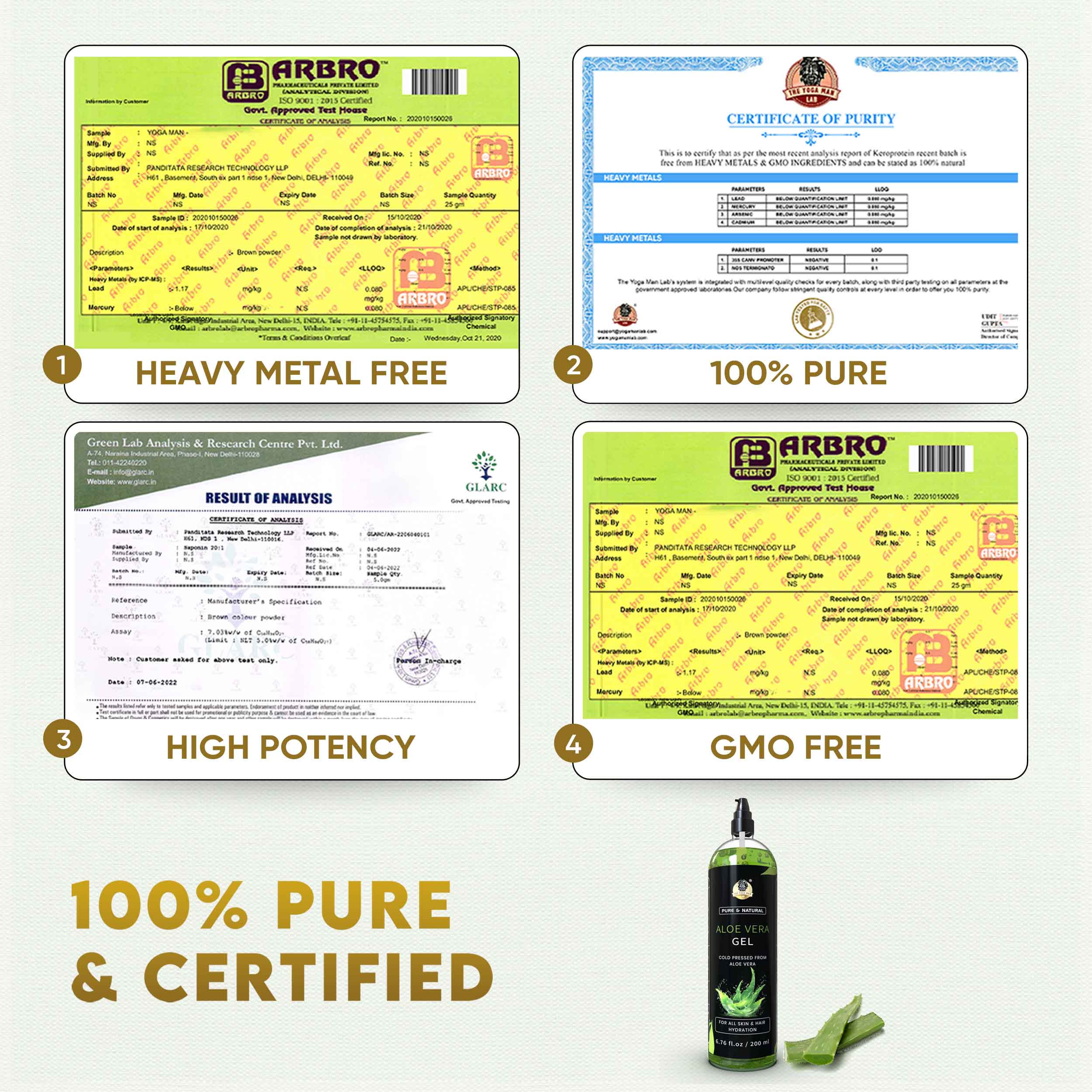
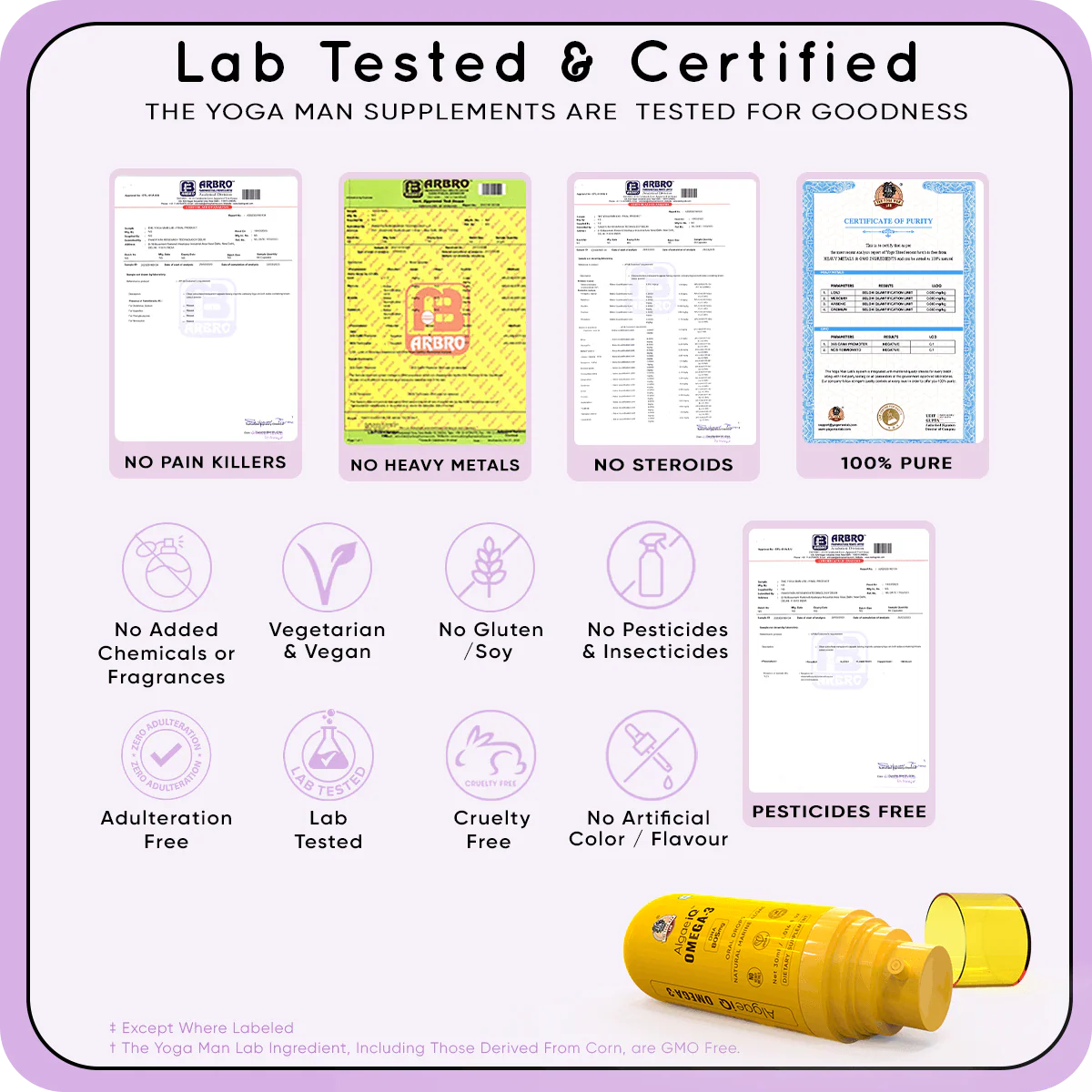
HEAVY METAL FREE
The Yoga Man Lab adhere to regulatory limits set by the FDA and WHO. Heavy metal contamination can occur at farms or during manufacturing, which can lead to severe health issues such as respiratory problems, neurological disorders, kidney damage, and cancer.

GMO FREE HERBS
GMOs herbs can disrupt the natural balance and effectiveness of medicines and pose risks to human health and the environment. They can lead to health problems like allergies, antibiotic resistance, etc.
PESTICIDE FREE
Pesticides can harm human health and the environment. Pesticides can cause health issues such as cancer, reproductive problems in humans etc.
STEROID FREE
Adulterating medicines with steroids can lead to serious health risks and improper hormone functioning. We prioritize the safety of our customers by offering medicines produced in accordance with Ayurveda and legal standards.
PURE & POTENT
Our Ayurvedic medicines are made from high-quality, potent herbs that are rich in efficacy. We use only the finest raw herbs to create our products and we also make sure to use advance extraction process so that the natural potency is preserved.
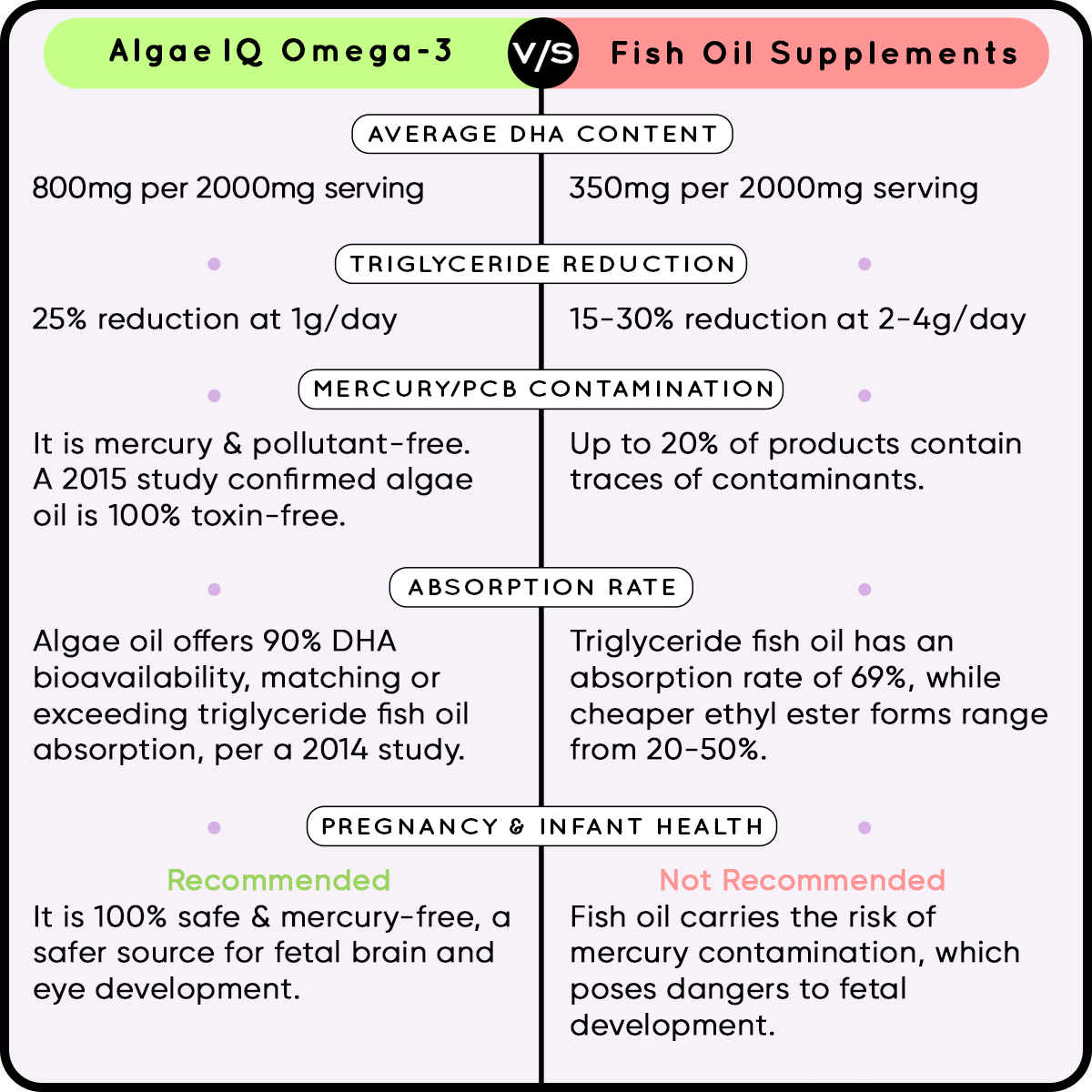
AlgaeIQ® Omega-3 VS Fish Oils
| Category | Fish Oil Supplements
x
|
AlgaeIQ Omega-3
✔
|
|---|---|---|
| Image |  |
 |
| Omega-3 Content (DHA) | Average DHA content: 180 mg per 1,000 mg serving | Average DHA content: 250 mg per 1,000 mg serving |
| Omega-3 Content (EPA) | Average EPA content: 120 mg per 1,000 mg serving | Average EPA content: 50 mg per 1,000 mg serving (varies by product) |
| Absorption Rate | Triglyceride-based fish oil supplements show an absorption rate of around 69%. Ethyl ester forms (a cheaper version) have lower absorption, around 20-50%. | Algae oil has been shown to have similar or better absorption rates to triglyceride fish oil, with a 90% bioavailability of DHA, according to a 2014 study. |
| Risk of contamination From Mercury/PCBs | Up to 20% of products contain traces of contaminants | Free from mercury and other oceanic pollutants. A 2015 study showed that 100% of tested algae oil samples were 100% toxin-free. |
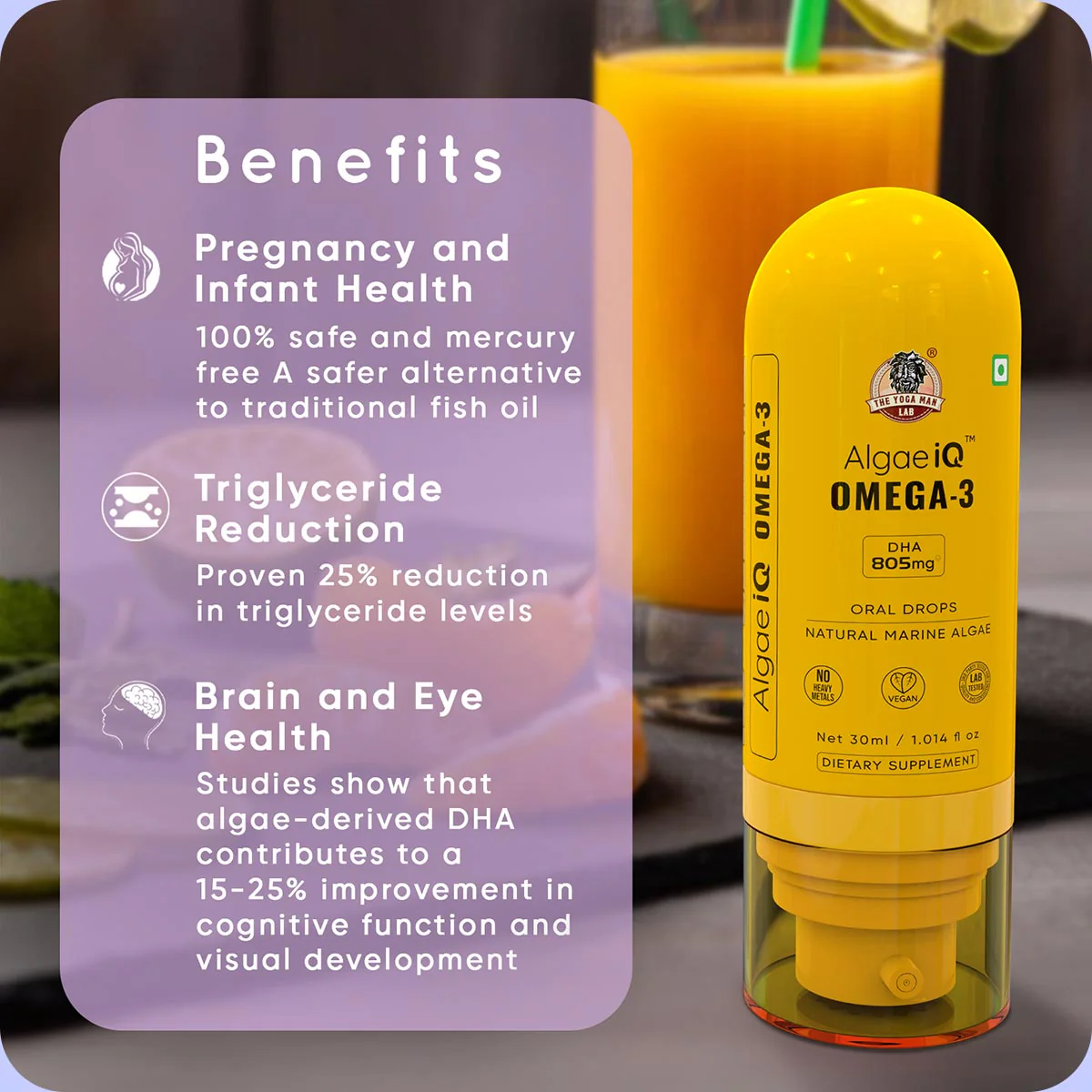
| Pregnancy and Infant Health | RecommendNed daily intake during pregnancy is 200 mg of DHA. However, fish oil can carry the risk of mercury contamination, which poses dangers to fetal development. | 100% safe, mercury-free A safer alternative with the same recommended intake of 200-300 mg DHA per day for pregnant women. It is completely free of mercury, providing a safer source for fetal brain and eye development. |
| Triglyceride Reduction | 15-30% reduction at 2-4g/day | 25% reduction at 1g/day |
| Brain and Eye Health | Omega-3 DHA from fish oil has been linked to improvements in cognitive function, with studies showing an increase in brain DHA levels by 15-30% with regular supplementation. | Studies on algae-derived DHA show a similar 15-25% increase in brain DHA concentrations, with potential superior efficacy in certain populations due to better absorption. |
| Sustainability | An estimated 20-25% of the world’s commercial fish catch is used for fish oil production. Overfishing contributes to marine ecosystem depletion. | Algae can be grown in controlled environments with virtually no impact on marine ecosystems. A study suggests that algae oil farming has up to 50% lower carbon footprint than fish oil production. |
| SIDE EFFECTS | The most common side effects from fish oil are: indigestion and gas Bad breath Bad-smelling sweat Headache Heartburn, nausea, and diarrhea Unpleasant taste in your mouth |
Types Of Omega-3 Fatty Acids
There are 6 types of Omega-3 fatty acids:
Docosahexaenoic Acid (DHA) [22:6 (n−3)]
Supports brain, Heart & eye health, and cognitive function.
Eicosapentaenoic acid (EPA) [20:5 (n−3)]
Reduces inflammation and mood support.
α-Linolenic acid (ALA)
Plant-based omega-3 for basic heart health, converted to EPA/DHA in small amounts.
Stearidonic acid (SDA)
Precursor to EPA.
Eicosatetraenoic acid (ETA)
Less common but have anti-inflammatory properties.
Docosapentaenoic acid (DPA)
Boosts DHA/EPA benefits, supports heart and vascular health.

Safest Form For Human Consumption
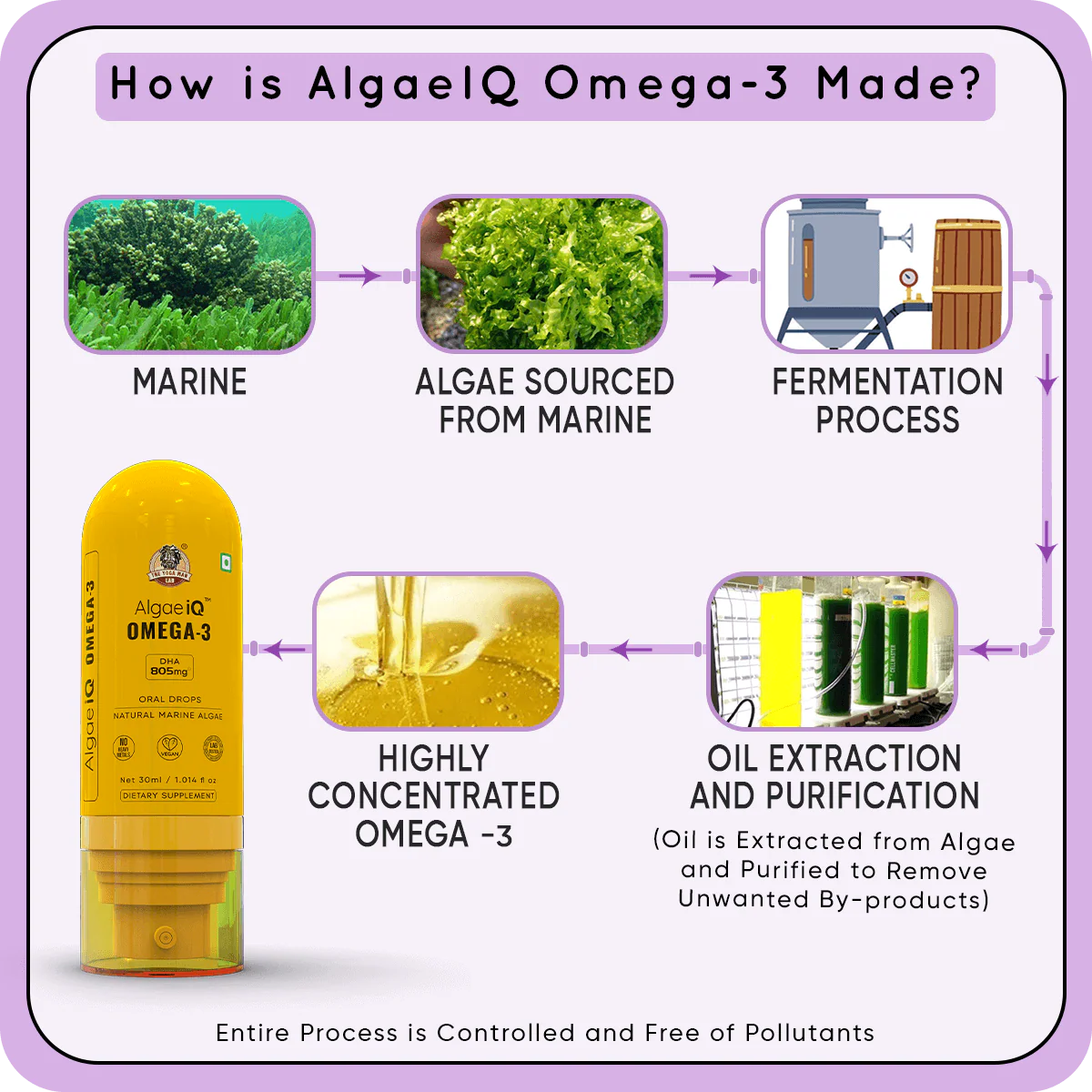
AlgaeIQ oil is derived from marine algae making it free from pollutants like mercury, heavy metals, PCBs, and microplastics, ensuring a pure and safe omega-3 source.
Recommended For:
- ✔ Pregnant Women
- ✔ Adults
- ✔ Children
How To Detect Omega-3 Deficiency ?
A blood test (Omega-3 Index) is the most accurate way to detect omega-3 deficiency, as it measures DHA and EPA levels in red blood cells. Alternatively, these signs may also indicate a deficiency.
FAQ
AlgaeIQ Omega-3 is derived directly from algae, the original source of omega-3. It’s 100% plant-based, free from contaminants like mercury and microplastics found in fish oil, and offers 800 mg DHA per serving for superior brain, heart, and overall health benefits.
Yes! AlgaeIQ Omega-3 is completely plant-based, making it the perfect omega-3 solution for vegans, vegetarians, and anyone seeking a sustainable & better alternative to fish oil.
Original: $120.80
-70%$120.80
$36.24Product Information
Product Information
Shipping & Returns
Shipping & Returns
Description
Benefits Of Taking AlgaeIQ® Omega-3
800mg of DHA
-
Skin irritation and dryness
Restore Skin Hydration and Reduce Irritation
AlgaeIQ Omega-3® improves skin barrier function by nourishing cell membranes, reducing inflammation, and promoting hydration to combat dryness and irritation.
-
Eczema / Psoriasis
Soothe Inflammatory Skin Conditions
The potent anti-inflammatory effects of DHA in AlgaeIQ Omega-3® help calm irritated skin and reduce symptoms of eczema and psoriasis.
-
Skin Sensitivity
Protect Skin from UV Damage
Omega-3 fatty acids enhance skin resilience by reducing oxidative stress and inflammation caused by UV exposure, supporting healthier skin.
-
Depression / Anxiety
Support Mental Health Naturally
DHA in AlgaeIQ Omega-3® plays a critical role in brain function, supporting neurotransmitter balance and reducing symptoms of depression and anxiety.
-
High Blood Pressure
Maintain Healthy Blood Pressure Levels
Omega-3 improves heart health by enhancing blood vessel elasticity and reducing inflammation, helping regulate blood pressure naturally.
-
Dry Eyes
Relieve Dryness and Improve Eye Comfort
AlgaeIQ Omega-3® promotes tear production and reduces inflammation in the eyes, providing relief from dryness and irritation.
-
Joint Pain and Stiffness
Ease Joint Discomfort and Inflammation
The anti-inflammatory properties of AlgaeIQ Omega-3® help reduce joint pain, stiffness, and swelling, especially in arthritis.
-
Hair Loss / Hair Changes
Nourish Hair for Strength and Shine
Omega-3 nourishes hair follicles, reduces scalp inflammation, and promotes healthier, thicker, and stronger hair growth.
-
High Blood Sugar
Support Better Blood Sugar Regulation
Omega-3 helps improve insulin sensitivity and reduces inflammation associated with high blood sugar, supporting better metabolic health.
-
Obesity
Aid in Weight Management
AlgaeIQ Omega-3® enhances fat metabolism, reduces inflammation, and supports a healthier metabolic profile, aiding weight management.
How much omega-3s do I need?
The National Institutes of Health suggests you eat about 1-1.5 grams of omega-3 fatty acids every day as part of a healthy diet.
The amount of omega-3s, especially DHA, you need depends on your age, health condition, and life stage. Here are general recommendations:
| Category | Daily Human Omega-3 Requirement? (General Guidelines) |
|---|---|
| Adults: |
|
| Pregnant & Breastfeeding Women: | 300–500 mg DHA daily to support fetal brain and eye development. |
| Infants and Children: |
|
| Old | 500–1000 mg DHA/EPA daily to support cognitive health and reduce the risk of neurodegenerative diseases. |
Quality & Safety Standard Certification
HEAVY METAL FREE
The Yoga Man Lab adhere to regulatory limits set by the FDA and WHO. Heavy metal contamination can occur at farms or during manufacturing, which can lead to severe health issues such as respiratory problems, neurological disorders, kidney damage, and cancer.
GMO FREE HERBS
GMOs herbs can disrupt the natural balance and effectiveness of medicines and pose risks to human health and the environment. They can lead to health problems like allergies, antibiotic resistance, etc.
PESTICIDE FREE
Pesticides can harm human health and the environment. Pesticides can cause health issues such as cancer, reproductive problems in humans etc.
STEROID FREE
Adulterating medicines with steroids can lead to serious health risks and improper hormone functioning. We prioritize the safety of our customers by offering medicines produced in accordance with Ayurveda and legal standards.
PURE & POTENT
Our Ayurvedic medicines are made from high-quality, potent herbs that are rich in efficacy. We use only the finest raw herbs to create our products and we also make sure to use advance extraction process so that the natural potency is preserved.
AlgaeIQ® Omega-3 VS Fish Oils
| Category | Fish Oil Supplements
x
|
AlgaeIQ Omega-3
✔
|
|---|---|---|
| Image | |
|
| Omega-3 Content (DHA) | Average DHA content: 180 mg per 1,000 mg serving | Average DHA content: 250 mg per 1,000 mg serving |
| Omega-3 Content (EPA) | Average EPA content: 120 mg per 1,000 mg serving | Average EPA content: 50 mg per 1,000 mg serving (varies by product) |
| Absorption Rate | Triglyceride-based fish oil supplements show an absorption rate of around 69%. Ethyl ester forms (a cheaper version) have lower absorption, around 20-50%. | Algae oil has been shown to have similar or better absorption rates to triglyceride fish oil, with a 90% bioavailability of DHA, according to a 2014 study. |
| Risk of contamination From Mercury/PCBs | Up to 20% of products contain traces of contaminants | Free from mercury and other oceanic pollutants. A 2015 study showed that 100% of tested algae oil samples were 100% toxin-free. |
| Pregnancy and Infant Health | RecommendNed daily intake during pregnancy is 200 mg of DHA. However, fish oil can carry the risk of mercury contamination, which poses dangers to fetal development. | 100% safe, mercury-free A safer alternative with the same recommended intake of 200-300 mg DHA per day for pregnant women. It is completely free of mercury, providing a safer source for fetal brain and eye development. |
| Triglyceride Reduction | 15-30% reduction at 2-4g/day | 25% reduction at 1g/day |
| Brain and Eye Health | Omega-3 DHA from fish oil has been linked to improvements in cognitive function, with studies showing an increase in brain DHA levels by 15-30% with regular supplementation. | Studies on algae-derived DHA show a similar 15-25% increase in brain DHA concentrations, with potential superior efficacy in certain populations due to better absorption. |
| Sustainability | An estimated 20-25% of the world’s commercial fish catch is used for fish oil production. Overfishing contributes to marine ecosystem depletion. | Algae can be grown in controlled environments with virtually no impact on marine ecosystems. A study suggests that algae oil farming has up to 50% lower carbon footprint than fish oil production. |
| SIDE EFFECTS | The most common side effects from fish oil are: indigestion and gas Bad breath Bad-smelling sweat Headache Heartburn, nausea, and diarrhea Unpleasant taste in your mouth |
Types Of Omega-3 Fatty Acids
There are 6 types of Omega-3 fatty acids:
Docosahexaenoic Acid (DHA) [22:6 (n−3)]
Supports brain, Heart & eye health, and cognitive function.
Eicosapentaenoic acid (EPA) [20:5 (n−3)]
Reduces inflammation and mood support.
α-Linolenic acid (ALA)
Plant-based omega-3 for basic heart health, converted to EPA/DHA in small amounts.
Stearidonic acid (SDA)
Precursor to EPA.
Eicosatetraenoic acid (ETA)
Less common but have anti-inflammatory properties.
Docosapentaenoic acid (DPA)
Boosts DHA/EPA benefits, supports heart and vascular health.
Safest Form For Human Consumption
AlgaeIQ oil is derived from marine algae making it free from pollutants like mercury, heavy metals, PCBs, and microplastics, ensuring a pure and safe omega-3 source.
Recommended For:
- ✔ Pregnant Women
- ✔ Adults
- ✔ Children
How To Detect Omega-3 Deficiency ?
A blood test (Omega-3 Index) is the most accurate way to detect omega-3 deficiency, as it measures DHA and EPA levels in red blood cells. Alternatively, these signs may also indicate a deficiency.
FAQ
AlgaeIQ Omega-3 is derived directly from algae, the original source of omega-3. It’s 100% plant-based, free from contaminants like mercury and microplastics found in fish oil, and offers 800 mg DHA per serving for superior brain, heart, and overall health benefits.
Yes! AlgaeIQ Omega-3 is completely plant-based, making it the perfect omega-3 solution for vegans, vegetarians, and anyone seeking a sustainable & better alternative to fish oil.